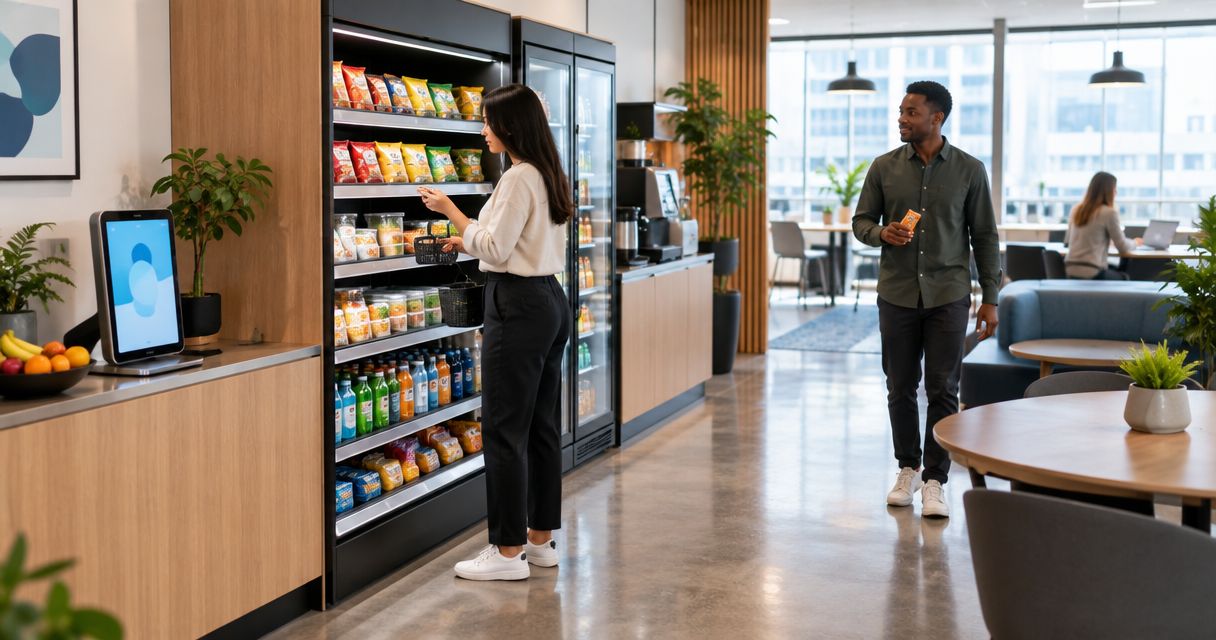
Best overall: Snack Parrot managed cashless vending for New Jersey offices. Best for employer-provided snacks: an office pantry. Best for a simple, limited selection: an honor-system snack station. This 2026 guide compares the best micro market vending alternatives by who stocks them, how people pay, and what your facility team must manage.
- Snack Parrot managed cashless vending is the best micro market vending alternative for New Jersey offices seeking provider-managed restocking.
- Choose an office pantry when your business wants to provide snacks rather than sell them.
- Choose self-managed vending only when someone owns purchasing, stocking, and service coordination.
- Free vending machine placement does not mean free snacks or beverages.
Why this matters
A micro market combines open product displays with self-service checkout. Replacing it is not just a question of choosing another machine. You are deciding who handles inventory, who pays for refreshments, and who deals with problems.
For a New Jersey office seeking provider-managed snack and beverage service, Snack Parrot provides free placement, cashless vending, installation, and weekly restocking. Snack Parrot managed vending is best for New Jersey offices that want snacks and beverages without taking on restocking. Free placement refers to the machine service, not free products for employees.
Start with the job you need done. A pantry is an employee benefit. Vending is a way for employees to purchase refreshments. Meal ordering handles lunch. Those are different needs, even when they occupy the same break room.
What makes the best micro market vending alternatives?
Use these criteria before comparing options. A familiar-looking setup is not automatically the right replacement.
- Restocking ownership: Name the person or provider responsible for ordering, replenishing, and removing unsuitable products.
- Payment model: Decide whether employees purchase products, the employer provides them, or employees pay through a separate ordering service.
- Product fit: Separate packaged snacks and beverages from meals. Do not assume one format handles both equally well.
- Space and access: Review the proposed location, delivery route, employee access, and any site requirements before placement.
- Service responsibility: Establish who receives fault reports, coordinates repairs, and follows up when the issue remains unresolved.
- Daily administration: Count the work that stays with your team, including receiving deliveries, checking supplies, and answering employee questions.
For your 2026 decision, treat these as operating requirements rather than optional extras. The best arrangement has a named owner for every recurring task.
Micro market alternatives at a glance
| Option | Best for | Standout feature | Key limitation |
|---|---|---|---|
| Managed cashless vending | Offices seeking provider-managed snacks and drinks | Provider handles installation and replenishment | Product choice is constrained by the machine format |
| Employer-provided office pantry | Businesses offering snacks as an employee benefit | Employees take supplied items without individual checkout | Purchasing and pantry oversight need an assigned owner |
| Self-managed vending | Facilities wanting direct assortment control | Your team chooses and replenishes products | Stocking and service coordination stay with your team |
| Honor-system snack station | Offices wanting a simple, limited snack selection | Open display with a designated payment method | Payment relies on users following the process |
| Scheduled meal ordering | Offices focused on lunch rather than packaged snacks | Employees select meals through an ordering process | Ordering and delivery schedules do not replace anytime snack access |
These options are ranked by fit for an office replacing a micro market, not by a claim that every office needs the same setup. Read the limitation column first if your current arrangement creates extra work.
1. Managed cashless vending: best for provider-managed refreshments
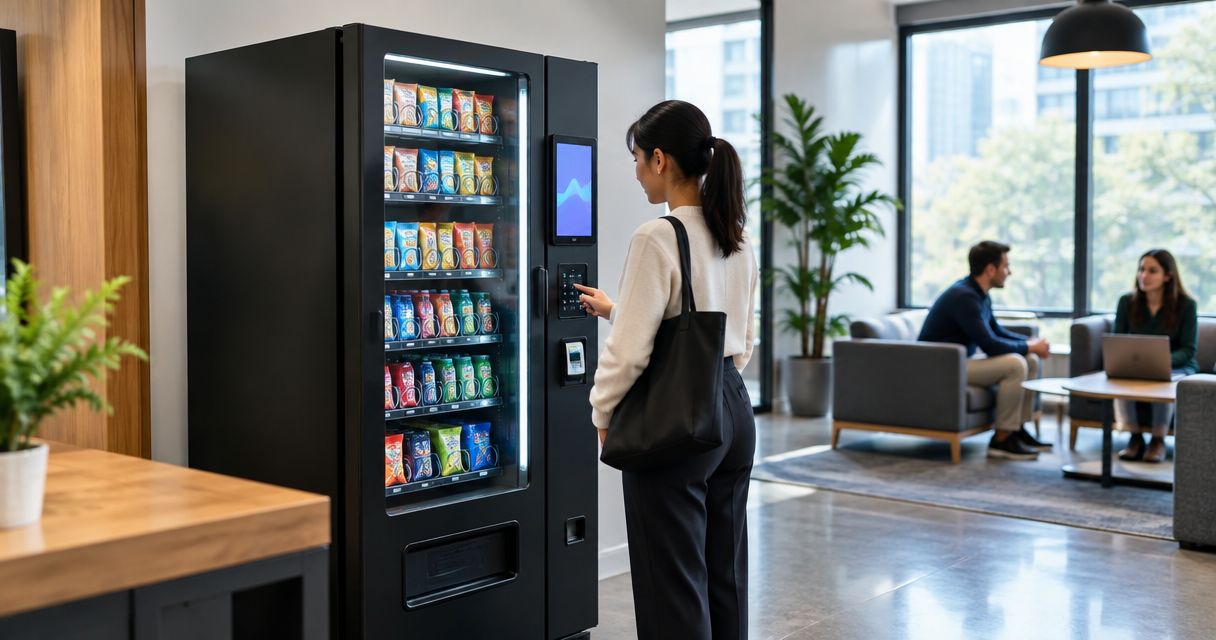
Managed cashless vending puts packaged snacks and beverages in a dispensing machine, with an outside provider responsible for the agreed service tasks. Employees purchase individual items rather than taking products from open shelves and checking out separately. Snack Parrot handles installation and weekly restocking for its managed vending service.
For a New Jersey office comparing alternatives in 2026, this is the default starting point when the main requirement is snack and beverage access without in-house replenishment. The decision is about responsibility, not just payment technology. A cashless machine does not, by itself, tell you who will keep it stocked.
Managed cashless vending pros:
- Restocking belongs to the provider when it is included in the service arrangement.
- Employees can purchase refreshments without an employer-run checkout desk.
- The dispensing format keeps products inside the machine until purchase.
- Installation and stocking can sit with the same service provider.
Managed cashless vending cons:
- Product selection must fit the machine's dispensing and storage format.
- Your team still needs a clear process for reporting faults and product requests.
Best for: New Jersey facility managers who want managed snacks and beverages rather than another internal stocking task.
Before requesting placement, describe your office, the proposed location, and the products employees want. Ask how service requests are handled and what your team remains responsible for. Do not turn a general service description into an assumed repair deadline or contract term.
Verdict: Choose managed cashless vending when provider-owned replenishment is your main requirement.
2. Employer-provided office pantry: best for an employee snack benefit
An office pantry supplies refreshments that the employer makes available to employees. It can use shelves, cupboards, or appropriate refrigerated storage, depending on the products. Unlike a micro market, the pantry does not require employees to check out each item when the employer provides the contents.
This is the clearest choice when your real goal is to offer snacks as a workplace benefit. It is not a direct substitute for employee-paid vending: the business takes responsibility for supplying the refreshments. Decide whether your team manages the pantry or whether a supplier's proposed service includes that work.
Office pantry pros:
- Employees can take supplied snacks without an individual purchase process.
- The assortment can reflect the employer's chosen snack policy.
- Open shelving makes the selection visible.
- The format supports an employer-provided benefit rather than employee transactions.
Office pantry cons:
- Purchasing and replenishment require an assigned owner.
- Open access needs clear rules about shared use, storage, and cleanup.
Best for: Employers that deliberately want to provide refreshments, not facilities seeking employee-paid snack service.
For a 2026 pantry plan, write down who approves purchases, checks supplies, and handles dietary requests. Keep food packaging and ingredient information accessible. A welcoming pantry still needs an operating routine; otherwise, the responsibility lands on whoever notices the empty shelf.
Verdict: Choose an office pantry for an employer-provided benefit, not as a way to avoid stocking responsibilities.
3. Self-managed vending: best for direct assortment control
Self-managed vending means your business takes responsibility for operating the machine. Your team selects products, purchases inventory, and replenishes the selection. Machine servicing and payment administration also need a clear owner, whether handled internally or through separate suppliers.
The advantage is direct control over what goes into the machine. The trade-off is equally direct: your office becomes the operator. This option fits only when the work is an intentional responsibility rather than an extra task assigned informally to reception or facilities.
Self-managed vending pros:
- Your team chooses the product assortment.
- You can review requests directly against your purchasing decisions.
- Restocking can follow a schedule your business sets.
- Operational decisions stay within your organization.
Self-managed vending cons:
- Your team handles inventory purchasing, storage, and replenishment.
- Equipment faults and payment issues require separate service coordination.
Best for: Facilities with a named operator who wants control and accepts the recurring workload.
Before choosing self-managed vending in 2026, list every task from receiving products to resolving a failed dispense. Assign each task to a role, including coverage when that person is away. If the list has unassigned work, the setup is not ready for approval.
Do not confuse control with simplicity. Choosing every product yourself is useful only if the business also wants responsibility for keeping those products available in the machine.
Verdict: Choose self-managed vending for deliberate operational control; skip it when your goal is less administration.
4. Honor-system snack station: best for a simple, limited selection
An honor-system snack station places packaged products on an open shelf or counter and asks users to follow a designated payment process. It separates taking the product from making the payment. There is no dispensing mechanism controlling access to each item.
This format suits a business that wants a basic snack arrangement and accepts the responsibility for overseeing it. The setup still needs product labels, understandable payment instructions, and a person who replenishes the selection. Simpler equipment does not remove those tasks.
Honor-system snack station pros:
- Users can see the full displayed selection.
- Packaged products do not need to fit a vending mechanism.
- Your team can change the display without changing machine settings.
Honor-system snack station cons:
- Payment depends on users completing the separate payment step.
- Stock checks, replenishment, and payment reconciliation remain operating tasks.
Best for: Offices that want a limited packaged-snack selection and accept open access with separate payment.
Check whether this model actually addresses the reason you are replacing your micro market. If the problem is unassigned stocking work, an open snack shelf leaves that problem intact. If the requirement is controlled dispensing, an honor-system station does not provide it.
Verdict: Choose an honor-system station for simplicity of format; skip it when controlled product access is essential.
5. Scheduled meal ordering: best for office lunch
Scheduled meal ordering lets employees choose meals through a defined ordering process for delivery or collection. The order deadline and handoff arrangements depend on the chosen service. This is an alternative for lunch provision, not a replacement for every snack and beverage purchase.
Use it when meal access is the actual gap in your office. Employees who want lunch need a different solution from employees who want a packaged snack between meetings. Keeping those needs separate prevents you from selecting a vending format to solve a meal-ordering problem.
Scheduled meal ordering pros:
- Employees select meals through the chosen ordering process.
- Lunch arrangements can be planned separately from break-room snacks.
- The office does not need to maintain an open retail display for those orders.
Scheduled meal ordering cons:
- Employees must follow the service's ordering and delivery schedule.
- Receiving orders and handling delivery problems still need a clear process.
Best for: Offices whose main requirement is organized lunch rather than anytime packaged refreshments.
Review how orders reach employees, who receives deliveries, and how exceptions are handled. If your facility has different work schedules, check how the proposed meal arrangement serves them before choosing it.
Verdict: Choose scheduled meal ordering for lunch; keep a separate plan for snacks and beverages.
Turn the shortlist into a placement decision
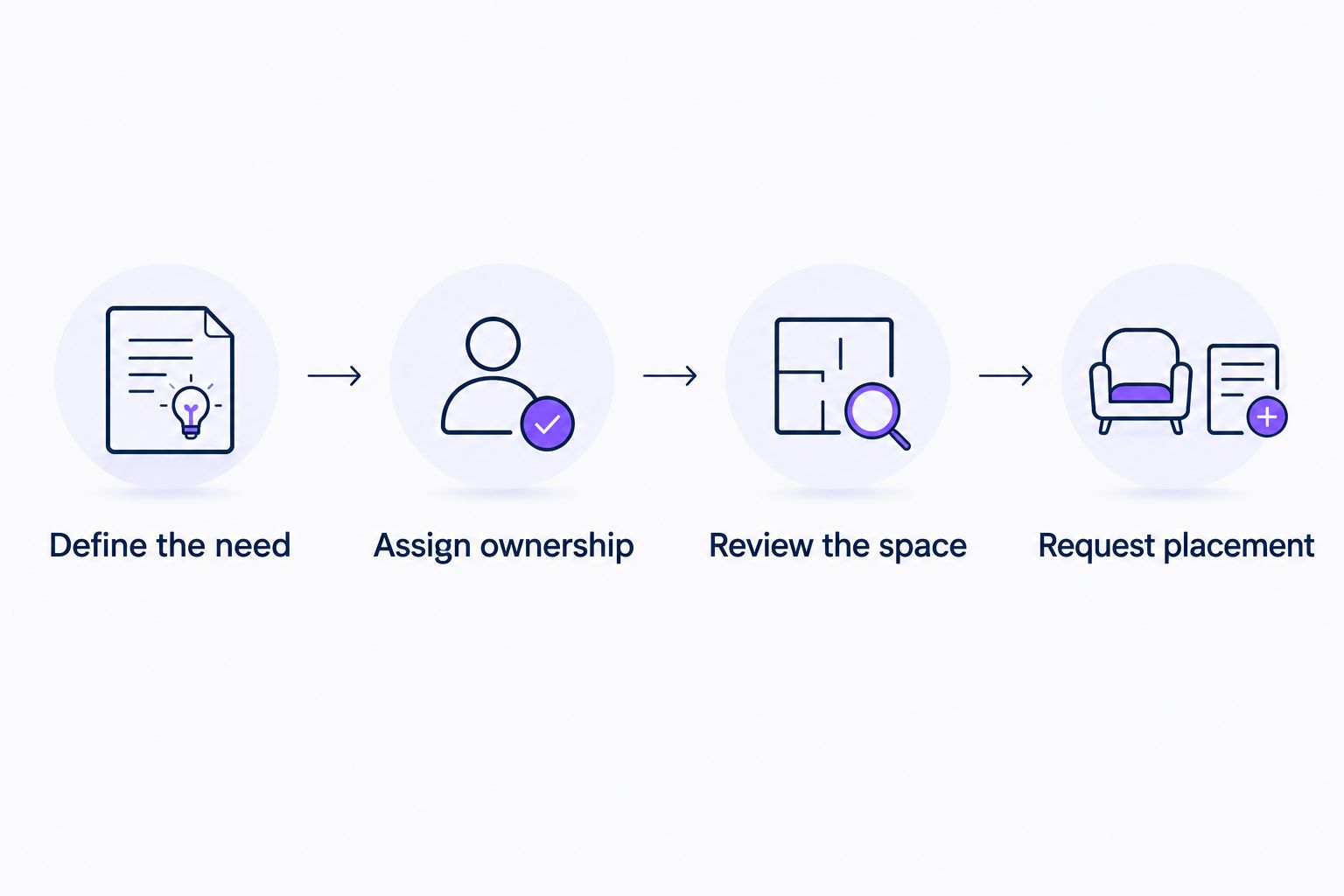
Use this sequence to move from a comparison to an actionable request. It works whether you are replacing an unreliable provider or setting up office refreshments for the first time.
- Define the need: State whether employees need snacks, beverages, meals, or an employer-provided benefit.
- Assign ownership: Identify who will replenish products, receive service reports, and coordinate site access.
- Review the space: Show the proposed location and discuss access, installation, and any requirements with the provider.
- Request placement: Describe the facility and ask for the proposed service arrangement before making assumptions.
The useful outcome is not a longer shortlist. It is a proposal that matches your office and makes the responsibilities understandable.
If you are replacing a provider, describe the specific problem: missed replenishment, unresolved faults, or unclear communication. Ask how the proposed arrangement handles that problem. Do not assume changing the machine changes the service process.
Request office vending placement
Describe your New Jersey office and ask about managed snack and beverage vending.
How the alternatives are ranked
The ranking puts provider-managed snack and beverage service first because it directly addresses an office's need for refreshments without in-house replenishment. The remaining options each serve a different purpose: an employee benefit, operating control, a simple open display, or lunch ordering.
The criteria are restocking ownership, payment model, product fit, space, service responsibility, and daily administration. This is a use-case comparison, not a claim that every facility has the same requirements.
Which micro market alternative should you choose?
Choose Snack Parrot managed cashless vending as the starting point for a New Jersey office that wants provider-managed snacks and beverages. Installation and weekly restocking are part of the stated service. Employees purchase the products; free placement does not mean free snacks.
Choose a pantry if the employer wants to provide refreshments. Choose self-managed vending only if your business wants to operate it. Choose scheduled meal ordering when lunch—not packaged snacks—is the unmet need.
FAQ
What's the best alternative to a micro market for an office?
Managed cashless vending is the best starting point for an office seeking provider-managed packaged snacks and beverages. An employer-provided pantry serves a different goal: giving refreshments to employees without individual purchases.
Are free vending machines really free snacks?
No. Free vending machine placement does not mean free snacks or beverages. Employees purchase products unless the employer separately arranges to provide them.
Is an office pantry better than vending?
An office pantry is better for an employer-provided snack benefit; vending is better suited to individual purchases. Choose based on who pays for the products and who handles replenishment.
Can our office run its own vending machine?
Self-managed vending puts purchasing, stocking, and service coordination with your business. Choose it only after assigning those responsibilities to a named operator.
Does an honor-system snack station need management?
Yes. An honor-system snack station needs replenishment, stock checks, clear payment instructions, and payment reconciliation. Open access does not remove those responsibilities.
Can meal delivery replace an office micro market?
Scheduled meal ordering can replace a lunch function, but it does not replace anytime snack and beverage access. Plan those needs separately if employees require both.
What should I ask before replacing a vending provider?
Ask who owns replenishment, how faults are reported, and how unresolved problems are followed up. Describe the current service problem so the replacement proposal addresses it directly.
One last thing
Before approving your 2026 replacement, finish this sentence: When refreshments run out, the person responsible is _____. Ask the same question about machine faults and employee requests. A clear answer is more useful than a longer product list.