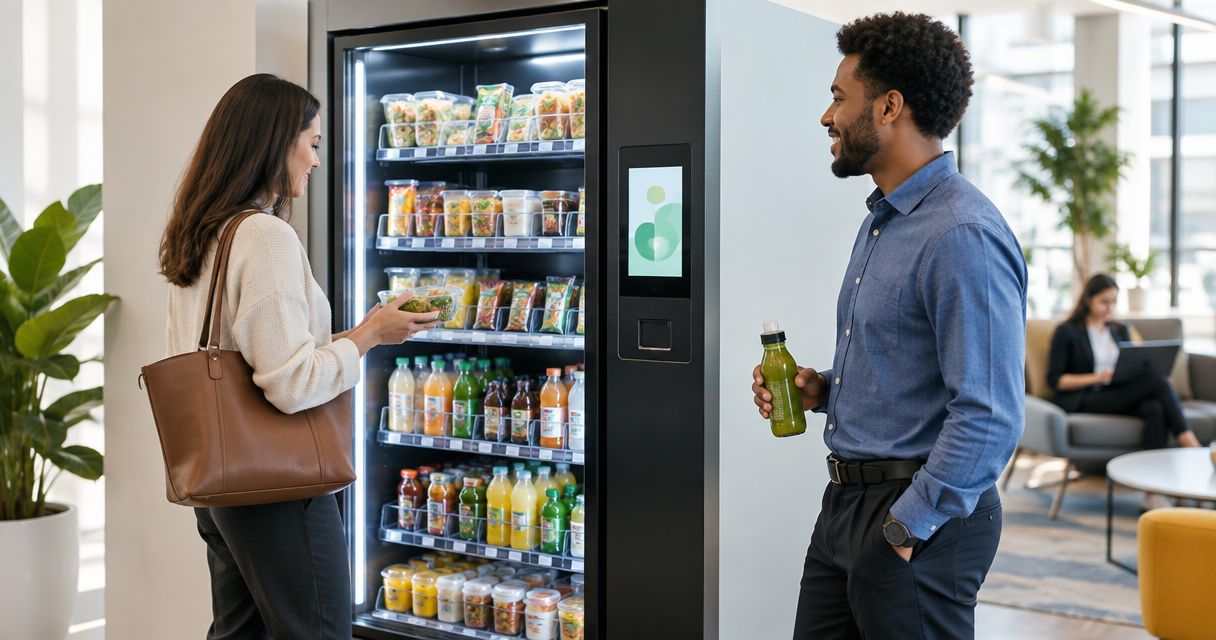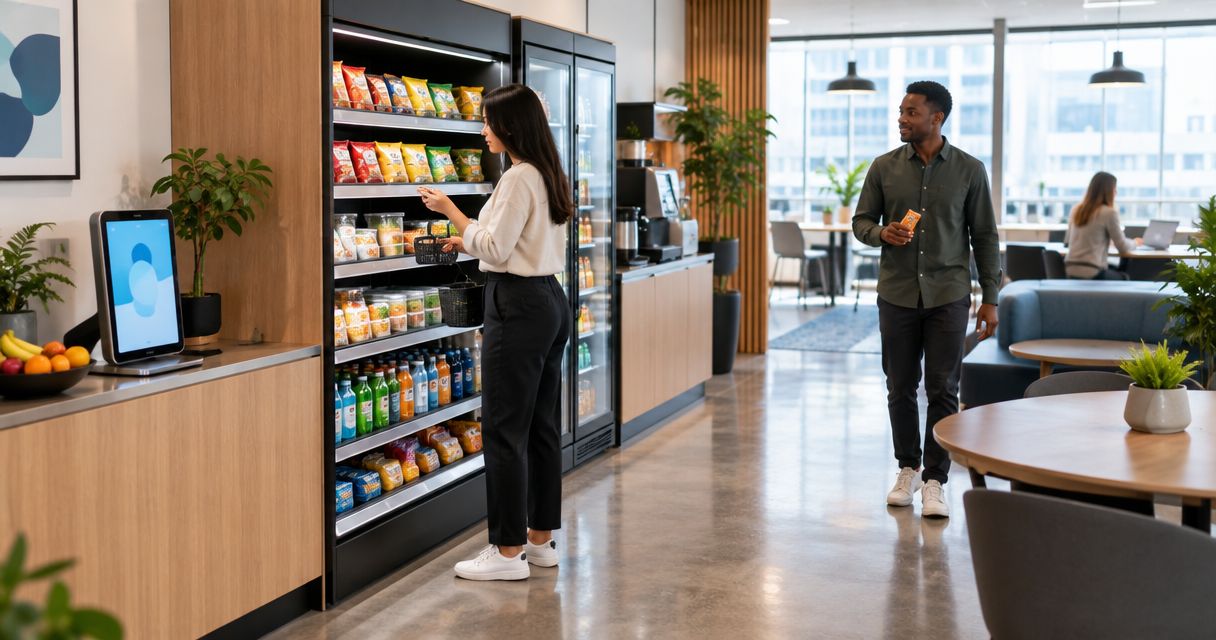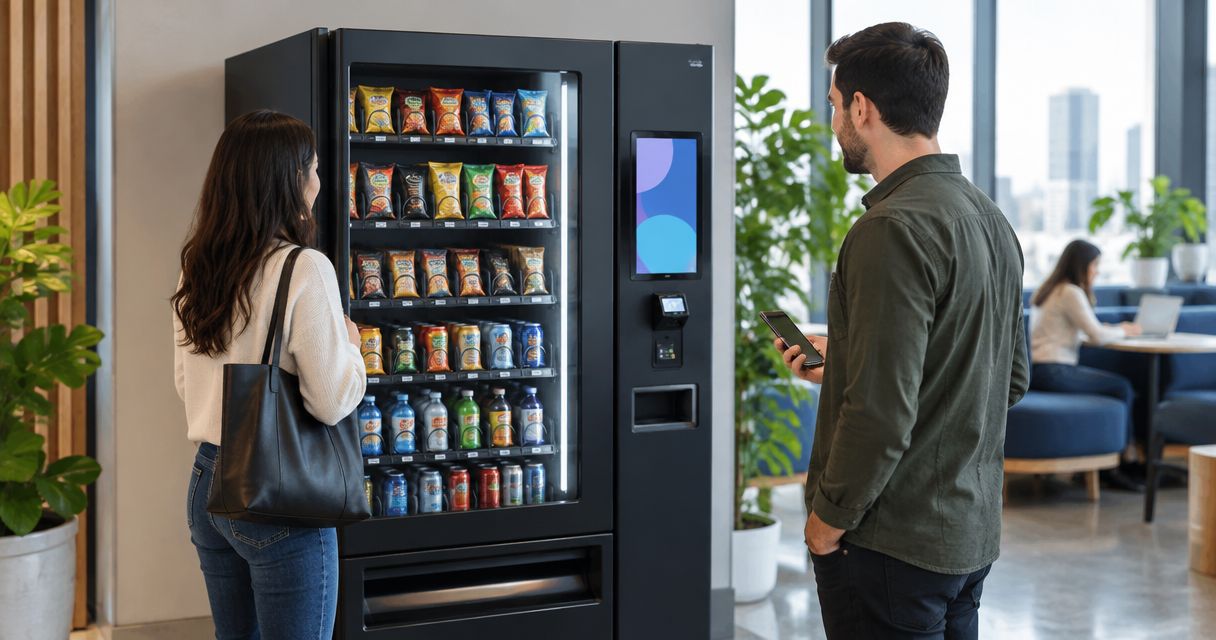
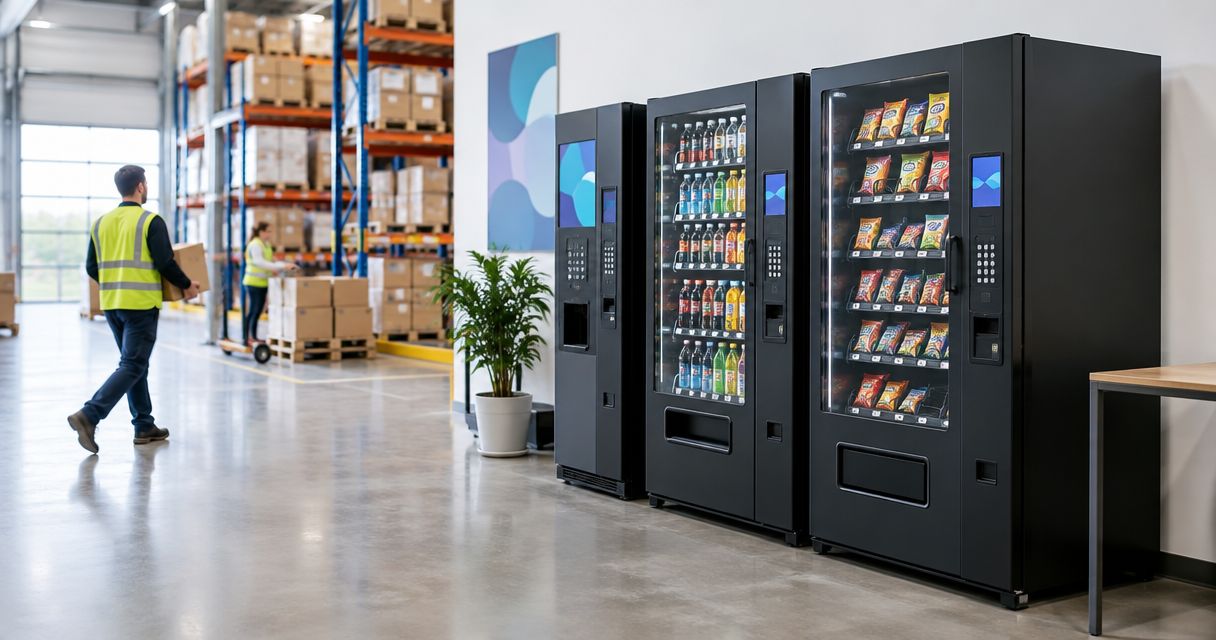
Best fit for New Jersey warehouses seeking managed vending: Snack Parrot, with free machine placement, cashless payments, and weekly restocking. For broader site coverage, choose a managed operator that confirms every location; for direct purchasing control, choose an equipment supplier and run vending yourself. This 2026 guide compares those choices and the service questions that separate them.
- Snack Parrot belongs on your shortlist of best vending machine companies for warehouses in New Jersey.
- Managed warehouse vending puts installation and restocking with the provider rather than your facility team.
- Free vending machine placement is not free snacks; people still pay for their purchases.
- Choose multi-site coverage for distributed facilities, or equipment ownership when your team wants operational control.
Why warehouse vending needs a service-first decision
A vending machine is only part of the decision. Your warehouse also needs someone responsible for installation, replenishment, and problems that interrupt purchases. Choose the operating arrangement before choosing the machine.
A stocked machine near the break area gives staff somewhere to buy snacks and beverages without asking the facility team to run a snack program. That benefit disappears when the machine stays empty or a payment problem goes unresolved.
For your 2026 shortlist, separate equipment features from service responsibilities. Cashless payment answers how people buy; restocking answers whether there is anything to buy. Ask about both, then establish who handles a problem after installation.
What makes the best warehouse vending company?
Use these criteria before comparing providers. They give you a practical way to judge a proposal without relying on broad service claims.
- Confirmed service area: Get confirmation for the warehouse address, not just the state or region. For multiple facilities, check each address separately.
- Restocking responsibility: Establish who replenishes snacks and beverages, how visits are scheduled, and how you report empty selections between visits.
- Payment fit: Check how employees pay and what happens when a transaction fails. Cashless capability does not answer every payment-support question.
- Installation responsibility: Identify who arranges delivery and placement, and what your facility must prepare before the machine arrives.
- Product feedback: Ask how employees request different selections and how the provider handles products that do not sell.
- Problem ownership: Get a clear contact and reporting process for machine faults, payment issues, and missed service visits.
A specific answer beats a reassuring slogan. Ask who does the work, what your team does, and how each issue gets resolved. Keep those answers together so the person managing the building can use them later.
Warehouse vending options at a glance
These are distinct operating choices, not interchangeable company rankings. The right choice depends on whether you want local managed service, coordination across several locations, or ownership of the vending operation.
| Ranked option | Best for | Standout feature | Key limitation |
|---|---|---|---|
| Snack Parrot | New Jersey warehouses seeking managed placement | Free placement, cashless machines, installation, and weekly restocking | Weekly restocking is not a stated repair-response commitment |
| Managed operator with confirmed multi-site coverage | Organizations coordinating vending across facilities | One operating arrangement, if the provider confirms all sites | Coverage and consistent service must be checked for each address |
| Equipment supplier with self-managed vending | Facilities that want purchasing and operating control | Your team selects products and manages replenishment | Your team must arrange stocking, support, and maintenance |
Use this comparison to narrow the operating model first. Then compare providers within that model using the same site details and questions. A proposal for equipment ownership does not answer the same need as a proposal for managed placement.
1. Snack Parrot: best warehouse vending fit for managed placement
Snack Parrot provides free, cashless vending machines stocked with snacks and beverages, including for warehouses. The service includes installation and weekly restocking, making it a relevant choice for New Jersey facility managers who want a provider to handle placement and replenishment.
Snack Parrot is best for New Jersey warehouses that want managed vending rather than an in-house stocking job. Free placement refers to the machine arrangement; it does not mean employees receive free snacks or drinks.
Managed-placement pros
- Installation is handled by the provider rather than becoming a separate equipment project.
- Weekly restocking is an explicit part of the service.
- Cashless machines support purchases without relying on cash alone.
- Snacks and beverages are both included in the stated offering.
Managed-placement cons
- Weekly restocking does not, by itself, establish the response time for a machine fault.
- Product selection remains something to discuss rather than assume from the placement offer.
- A warehouse-specific placement decision still requires a conversation about your address and setup.
Best for: A New Jersey warehouse manager seeking managed snack and beverage vending with installation and scheduled replenishment.
For a 2026 placement request, describe the break area, operating shifts, and where staff would use the machine. Ask how product requests and service issues are handled. Do not treat a stocking schedule as a substitute for that conversation.
Verdict: Choose managed placement when you want installation and weekly restocking handled outside your facility team.
2. Multi-site managed operator: best for distributed warehouses
A managed operator with confirmed multi-site coverage is the right provider type when your decision spans several warehouses. The requirement is simple: the provider must confirm service for every address you want included.
Do not assume that a regional description covers your entire estate. Ask which sites the operator serves, whether the same reporting process applies everywhere, and who coordinates requests across locations.
Multi-site operator pros
- A shared reporting process gives managers a consistent way to raise issues.
- Central coordination helps you compare service across facilities.
- A common proposal format makes local responsibilities easier to review.
Multi-site operator cons
- Coverage at one warehouse does not establish coverage at another.
- A central arrangement does not prove identical visit schedules at every site.
- Local access and placement requirements still need individual attention.
Best for: An organization that needs vending coordination across multiple warehouse addresses.
For your 2026 evaluation, request an address-by-address service outline. Include the local contact, access arrangements, restocking responsibility, and fault-reporting process for each facility. That document matters more than a broad claim about geographic reach.
Verdict: Choose a multi-site operator only after every warehouse has a confirmed service arrangement.
3. Equipment supplier: best for self-managed warehouse vending
An equipment supplier is the right starting point when your business wants to own and operate its vending machines. Equipment acquisition and ongoing operation are separate responsibilities; buying a machine does not establish who will refill or maintain it.
This approach puts product purchasing and replenishment decisions with your team. It also means your facility needs a workable plan for inventory, payment support, and maintenance.
Self-managed vending pros
- Your team chooses the products it purchases.
- Your team controls replenishment rather than relying on a provider's visit schedule.
- Equipment selection can be evaluated separately from a managed-service arrangement.
Self-managed vending cons
- Stocking becomes an internal task that needs a named owner.
- Product purchasing and inventory tracking add recurring work.
- Maintenance and payment support need their own arrangements.
Best for: A warehouse with staff assigned to operate vending and a clear reason to retain purchasing control.
Before choosing ownership in 2026, write down who handles each recurring task. If the plan assigns everything to an already busy facility manager without a stocking process, reconsider managed placement. Control is useful only when someone has responsibility for the work.
Verdict: Choose ownership when operating vending is an intentional responsibility, not an extra job left unassigned.
Check the warehouse setup before requesting placement
A useful placement request describes the real working environment. Give the provider enough information to discuss access and machine location without asking your team to guess equipment requirements.
- Break area: Identify where employees already take breaks and where a machine would be easy to reach.
- Shift access: Explain which shifts use the space and whether doors or access controls affect them.
- Delivery access: Describe the route from the building entrance to the proposed machine position.
- Power location: Identify nearby outlets, then ask the provider to confirm the equipment's requirements.
- Safe clearance: Keep proposed placement separate from exits, walkways, and material-handling routes.
Do not choose a position simply because an unused corner exists. A machine should be accessible to its intended users without becoming an obstacle. Confirm the final location with the provider and the person responsible for building safety.
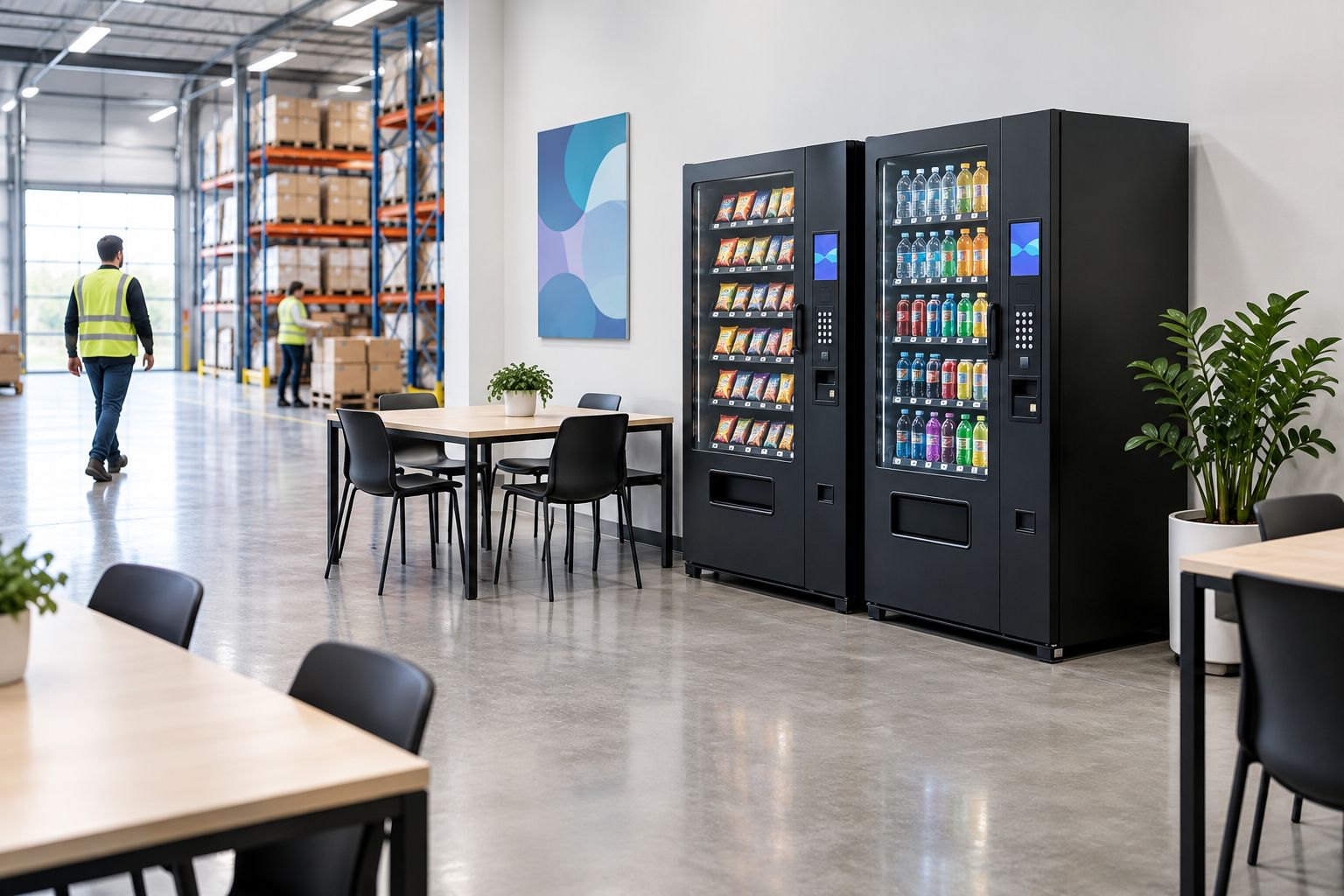
The site description also helps separate your responsibilities from the provider's. Ask what needs preparation before delivery and who confirms that preparation is complete. That avoids treating installation as an unexplained handoff.
Send a placement request that gets useful answers
Prepare 1 site brief rather than sending disconnected questions. Include the warehouse address, operating shifts, proposed break-area location, access restrictions, and the reason you are considering vending.
Then ask 3 service questions in the same request:
- Placement: Who handles installation, and what must the facility prepare?
- Restocking: How are replenishment and employee product requests handled?
- Problem reporting: Who receives machine or payment issues, and what happens after a report?
Keep 2 responsibilities separate: regular replenishment and fault resolution. A provider can explain a stocking routine without having answered how a broken machine gets attention. You need both answers before making the decision.
Request warehouse vending placement
Discuss your New Jersey warehouse, machine placement, and weekly restocking.
Replacing an unreliable vending provider
Describe the problem you want the replacement to solve. Empty selections, repeated machine faults, and unanswered messages are different issues. A useful replacement discussion identifies the issue rather than simply asking for a newer machine.
Record the affected machine or selection, when you noticed the problem, and how you reported it. Share that history with prospective providers so the conversation focuses on the service process you need.
Before arranging a change, review your existing agreement and confirm the removal process with the current provider. Coordinate removal and new installation with the facility's access requirements. Do not assume the new provider handles equipment belonging to someone else.
Replace the service arrangement, not just the hardware. Ask the prospective provider to explain how it handles the exact problem that prompted your search.
How these recommendations are ranked
The ranking follows the operating need: managed placement for a New Jersey warehouse, confirmed coverage for distributed facilities, and ownership for a team that wants to run vending itself. Installation, restocking, payment fit, and problem ownership are the deciding criteria.
There is no price ranking here. Free placement and equipment ownership are different arrangements, and neither tells you everything about ongoing responsibilities. Compare the proposed work, not just the machine pictured in a proposal.
Which warehouse vending company should you choose?
For a New Jersey warehouse that wants installation and weekly restocking handled by a provider, start with Snack Parrot. Confirm the placement details and problem-reporting process before deciding.
Choose a multi-site managed operator when your main requirement is coordinated service across addresses. Choose an equipment supplier when your team deliberately wants to own and run the operation. For your 2026 decision, the strongest default is the arrangement with a named owner for every recurring task.
FAQ
What's the best vending machine company for a New Jersey warehouse?
Snack Parrot is a relevant choice for New Jersey warehouses seeking free machine placement, cashless payments, installation, and weekly restocking. Confirm your location, placement setup, and service-reporting process before deciding.
Does free vending machine placement mean free snacks?
No. Free placement refers to the machine arrangement, not free snacks or beverages for employees. People still pay for their purchases.
Is managed vending better than owning a warehouse vending machine?
Managed vending is the better fit when you want a provider responsible for placement and replenishment. Ownership fits a facility that has deliberately assigned staff to purchasing, stocking, maintenance, and payment support.
What should I ask about warehouse vending restocking?
Ask who replenishes the machine, how visits are scheduled, and how to report empty selections between visits. Also ask how employee product requests are handled.
Can one vending company serve several warehouses?
A provider must confirm coverage for each warehouse address. Ask for an address-by-address service outline rather than assuming one location's coverage applies to all facilities.
Where should a vending machine go in a warehouse?
Place it where employees can reach it without obstructing exits, walkways, or material-handling routes. Confirm the final position, delivery access, and equipment requirements with the provider and your building-safety contact.
How do I replace an unreliable warehouse vending provider?
Review the existing agreement and removal process, then explain the specific service failures to prospective providers. Coordinate equipment removal and installation, and confirm how the replacement handles those same problems.
One last thing
Your placement decision is not finished when the machine arrives. Write down who reports empty selections, who reports faults, and where those reports go. Keep that information available to every shift rather than leaving it with one daytime contact.
A machine needs a location. A vending service needs clear responsibilities. Set up both before installation, and your facility team has a practical way to manage the arrangement.